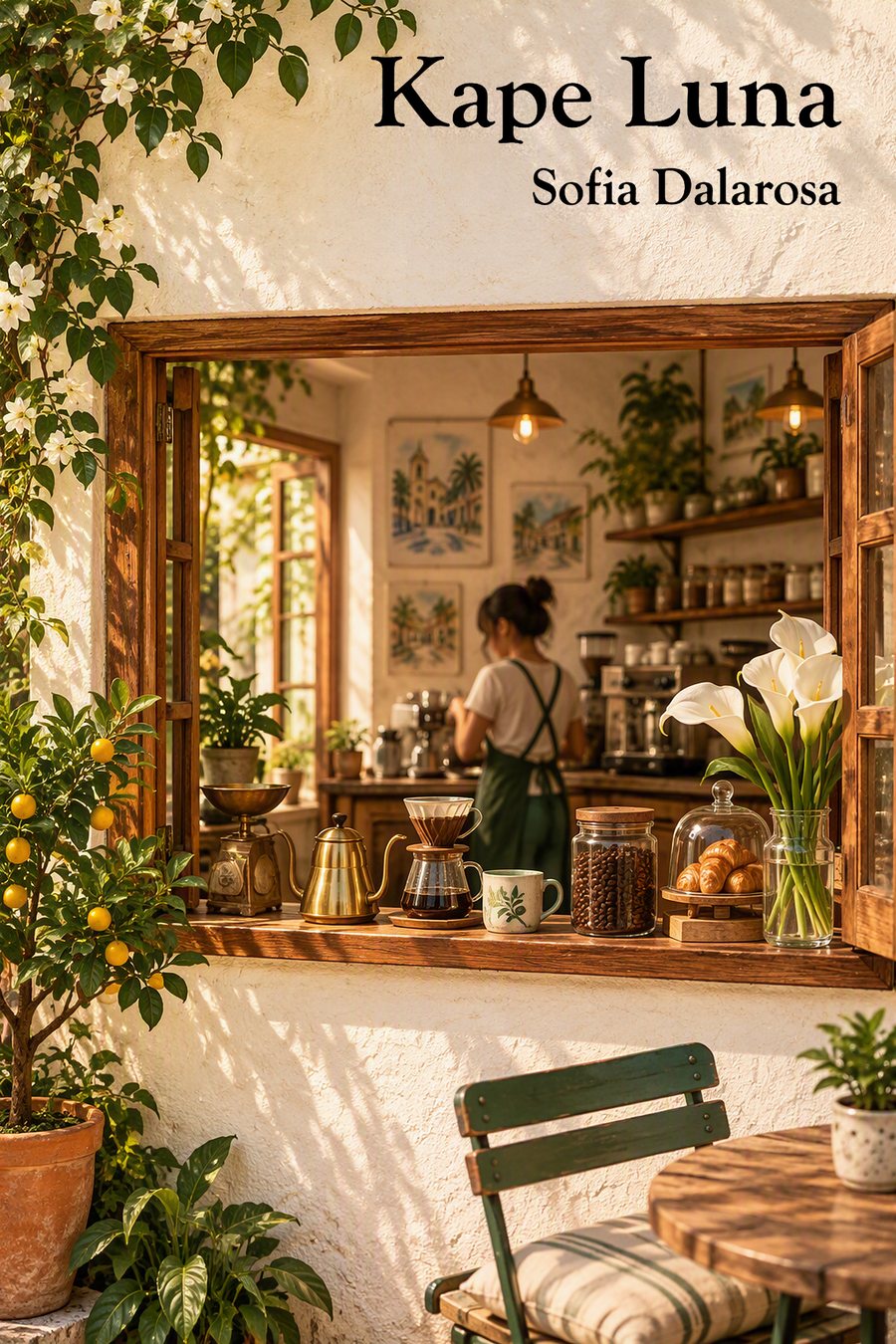
Chapter One
Kape Luna
The café announced itself with a smell before I saw it.
I had been walking for twenty minutes down a narrow side street, sweat already prickling at the small of my back, when the air changed. Freshly ground coffee — the real thing, not the burnt bitterness of a chain — cut through the diesel and dust like a line of clean water through muddy ground. I slowed, turned a corner, and there it was.
A two-storey building painted a soft, weathered white, tucked between a tailor’s shop and a sari-sari store; three houses down, a rooster was tied to a front gate. A handwritten wooden sign above the door read Kape Luna in careful, unhurried script. Through the open doorway I could see a handful of small wooden tables, a long counter of polished narra, and shelves of glass jars catching the morning light. No logo. No Instagram sticker in the window. Just a place.
I went in.
The interior was smaller than it had looked — maybe eight tables, all different, as if collected one at a time from different lives. A ceiling fan turned slowly overhead. The walls were the same soft white as the outside, hung with a few unframed watercolours of Cebu street scenes. A potted calamansi tree stood in the corner, its leaves glossy and dark. It smelled of coffee and something else — warm bread, maybe, and the faint citrus of the calamansi.
Behind the counter, a woman was weighing beans on a small brass scale.